How a block print is made
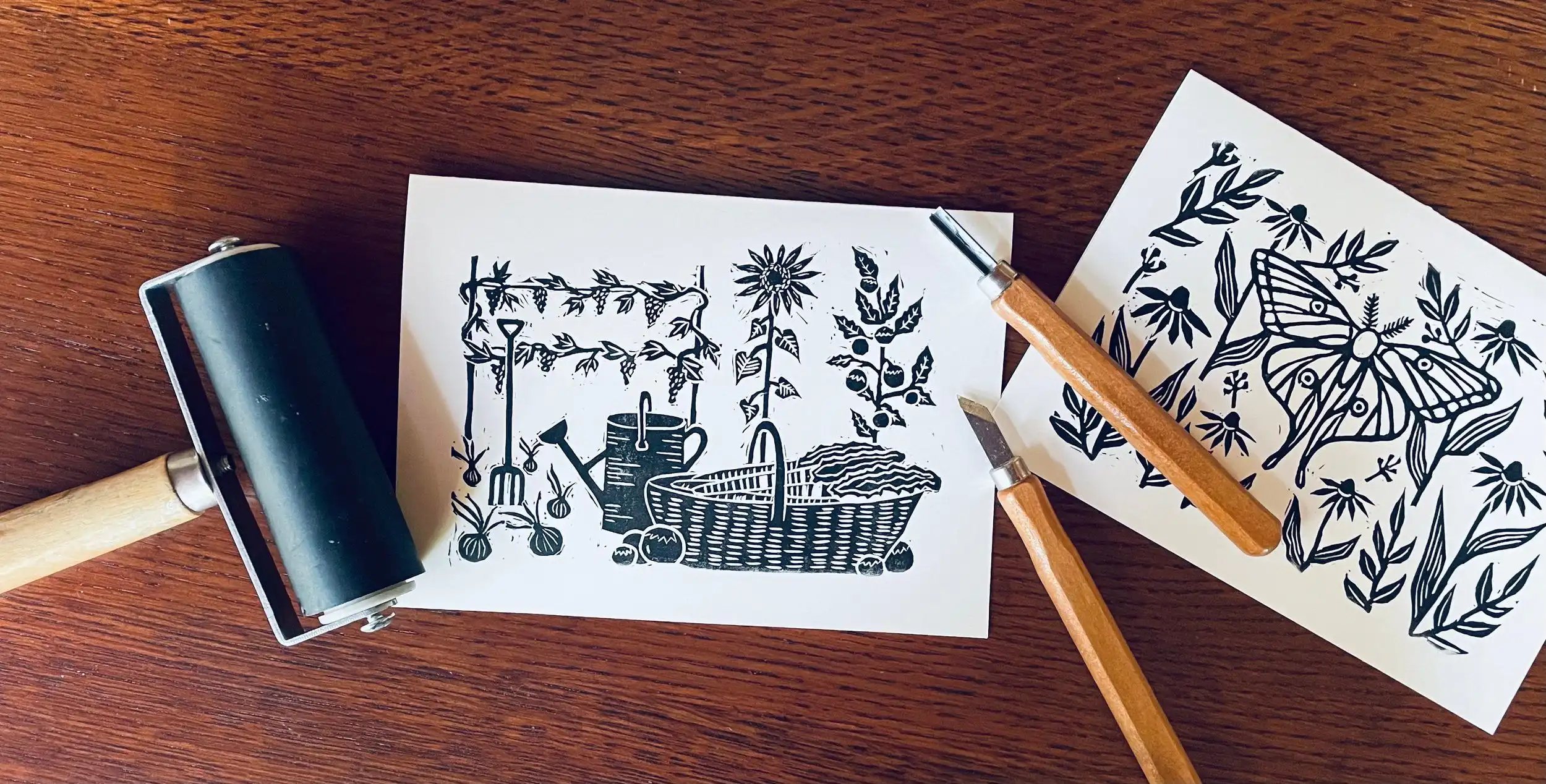
Block printing is one of the oldest ways of putting an image on paper. A design is carved into a block, the block is inked, and paper is pressed onto it. Everything in the studio room is made this way, or with its close cousin, drypoint.
Four steps
- 1 DrawThe design is sketched in reverse, since the block prints as a mirror image.
- 2 CarveEverything that should stay paper is cut away with gouges. What remains is the ink.
- 3 InkA brayer rolls a thin, even coat of oil-based ink across the raised surface.
- 4 PullPaper is laid over the block and burnished by hand. Lifting the sheet is the pull.
Linocut
The block is a sheet of linoleum. Carving away the surface leaves the design standing proud, so ink rolled over the top only touches what should print. Bold, graphic lines and solid blacks come from this: the lighthouse, the moth, the whales.
Drypoint
The opposite idea. Lines are scratched into a copper plate with a steel needle, ink is pushed down into the scratches and wiped off the surface, then damp paper is run through a press and pulls the ink back out. The result is fine, scratchy and alive. Plates wear quickly, so drypoint editions are small.
Why an edition
A block can be printed many times, but each pull is done by hand, and I decide in advance how many there will be. That number is the edition. Every sheet is signed, titled and numbered in pencil beneath the image: the title on the left, the number over the edition size in the middle, my signature on the right. When the last one is sold, the edition is complete, and it moves to the past editions.
Designs that people keep asking for can live on as reproductions from the press. Those are printed to order by a shop I trust, never by hand, and they don’t carry a pencil line.
Materials
- Blocks
- Battleship grey linoleum, mounted on birch
- Plates
- Copper, 18 gauge
- Tools
- Gouges, knives and a steel needle
- Ink
- Oil-based relief and intaglio inks
- Paper
- Stonehenge and Hahnemühle, acid free